Showing posts with label Guest Posts. Show all posts

Saturday, 13 July 2013

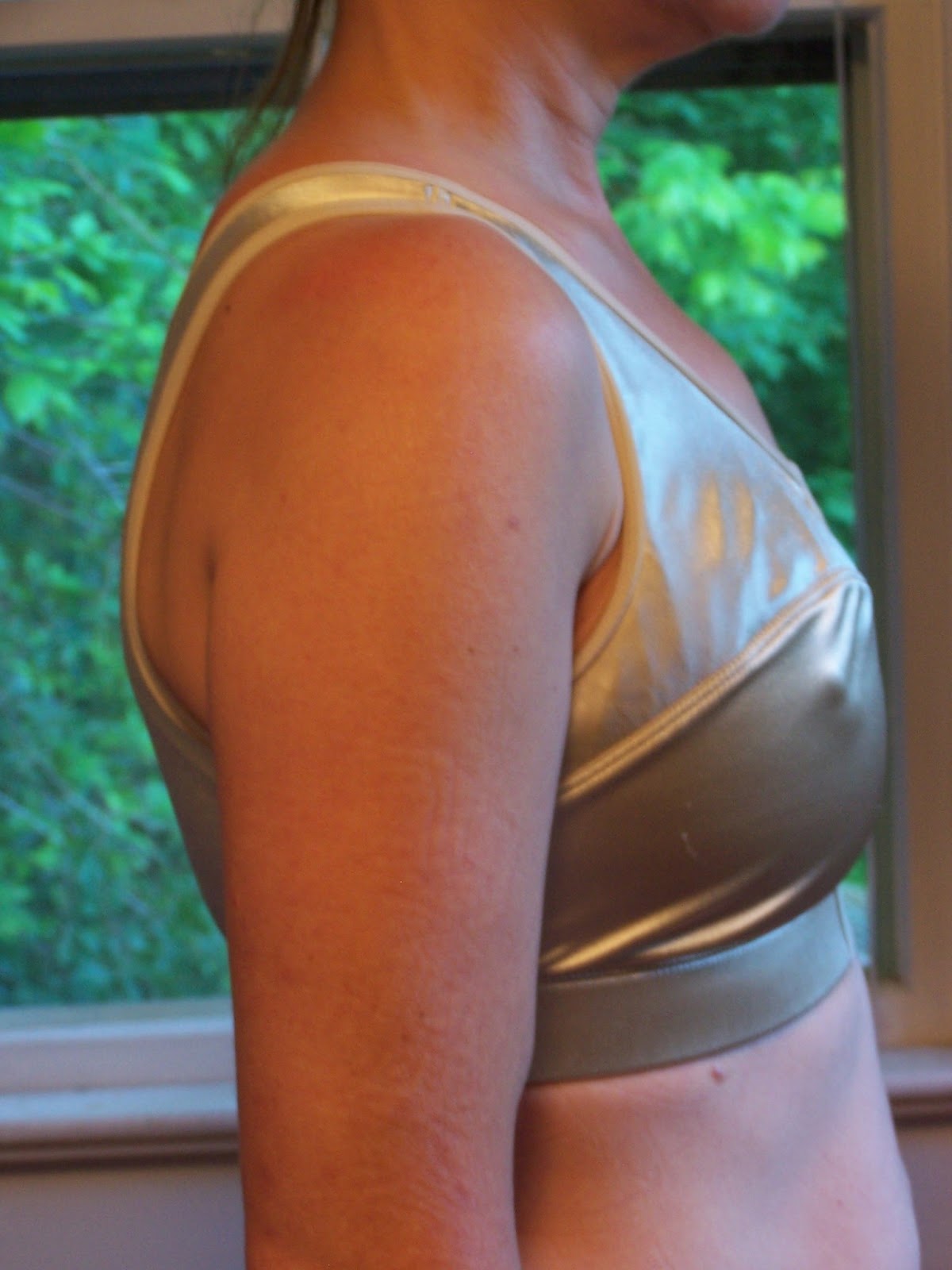
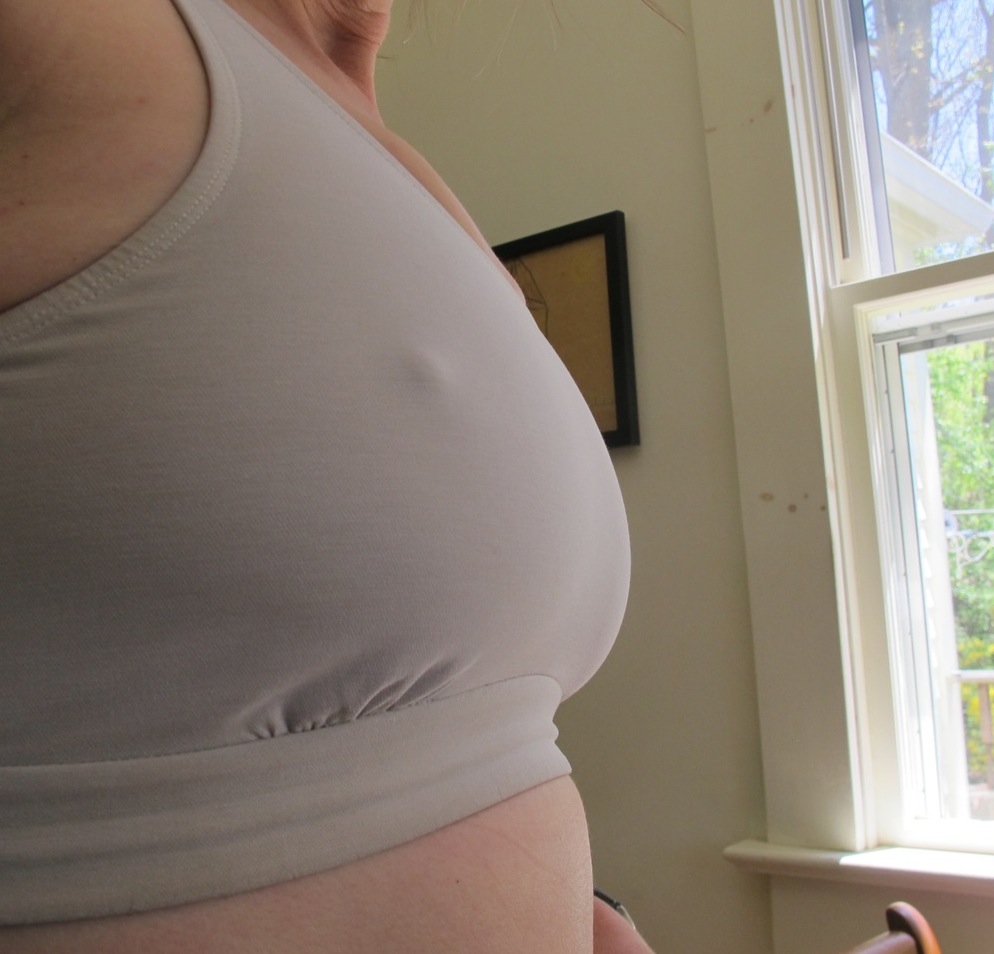
Guest Post: Enell Sports Bra Review

You might remember my mom's guest post in which she shared her experiences with various sports bras. She mentioned in that post that she had recently ordered an Enell sports bra, and many readers requested a full review. Ask and you shall receive! Here's her review of the Enell.


I wore my new Enell Sport bra for several trail and road runs. I forgot I was wearing a bra. More accurately, I forgot all about bras and chests. I just ran.

            The Enell—which, I reported before, suffers the unfair moniker of “Last Resort Bra” in the Title Nine Sports catalog—passes two acid tests. First, it holds my breasts close to the body so that they don’t bounce all over the place. (They still bounce. Breasts always will bounce a little. Anyone who says otherwise I challenge to a duel.)

             Second, the Enell does not chafe, even after several miles of sweaty running.

            Whenever I put on this bra, I laugh that I have gone backwards in time to the corset. That’s a joke that only a modern woman could make; in fact, it resembles a corset in length and front-hooks only. I realize that I know nothing of how my ancestors must have suffered. Corsets obviously were terribly constricting, and this bra is anything but that.

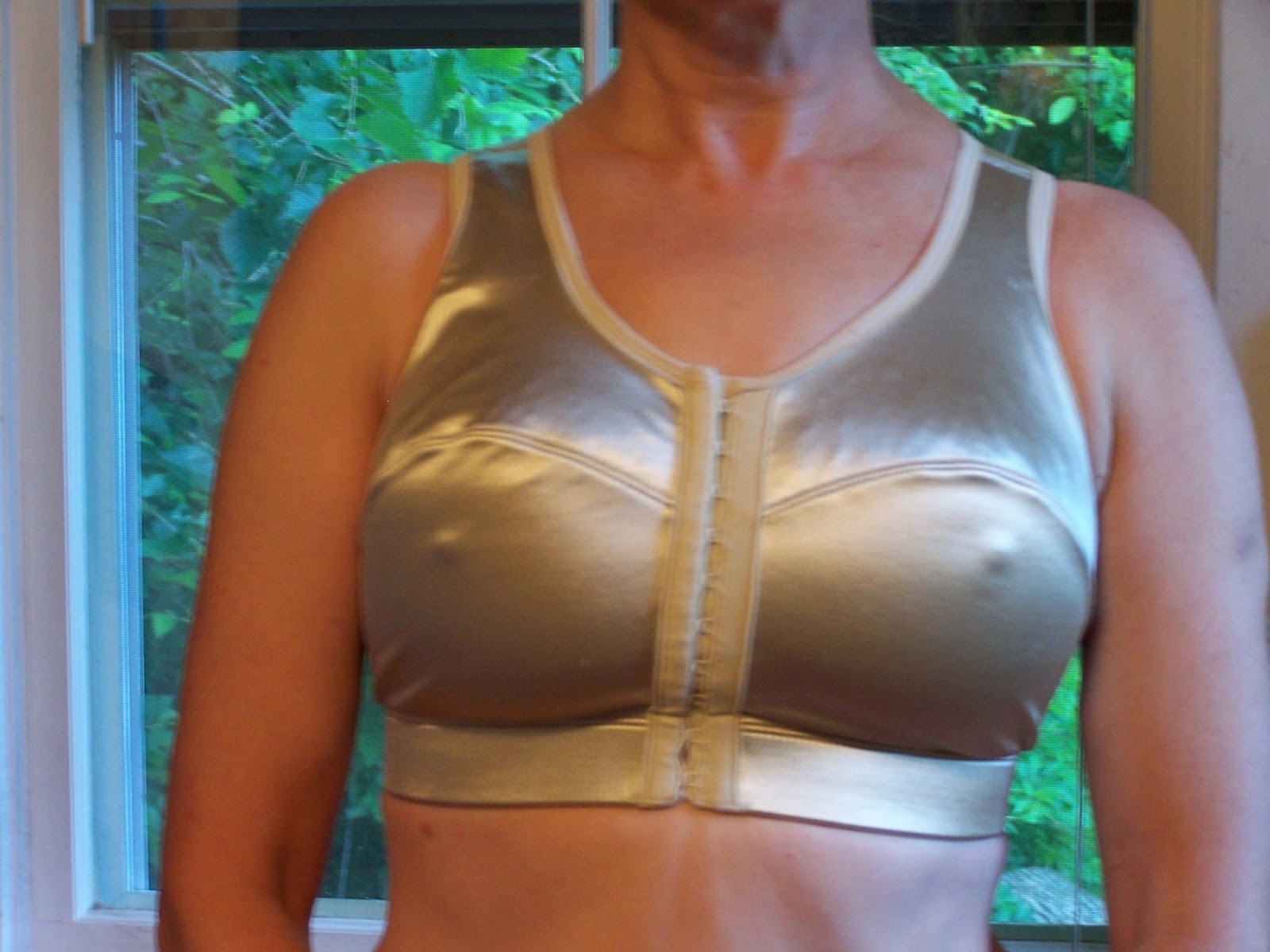
            But make no mistake: the Enell holds yo in for high-impact sports. It isn’t the sort of bra you’d wear all day at your desk, although you might be able to get away with it for half a day before you realized you were wearing a top with 12 hooks and eyes. Getting dressed into the Enell takes longer than hooking up any other bra I could mention. But it’s worth it. 

            I wear a 32E or sometimes 34DD these days. In an Enell sport bra, I choose size 1. The sizes go from 00 to 8, which means that this bra takes seriously its mission to help real women with real chests to real sports. I’d ignore the corresponding commercial bra sizes in the chart and stick to the bust and rib cage measurements as your guide. Oddly, the size chart never goes above a DDD in the cup size, which irritates me.

            Because of this size-chart vagueness, I worry that this bra is not sized for those with small rib cages and large breasts. Or that the size chart is misleading. So I suggest trying on a few for size.

            Remember, because it’s a sports bra, it is designed to give a bit. You are going to breathe hard when you run or jump for the volleyball net. The “give” cleverly remains in the back with wide criss-crossing elastics hidden beneath the fabric. The front of the bra has no elastic but does have seams, so the breasts are resting comfortably in those cages as I like to call them, without bouncing either out the bottom or up the front.

            A final word: I’ve lost weight since I bought my Enell—about 9 pounds. I don’t think I’ve gone down a size in my bras, but when I looked at these photos of me now, in the Enell, I see some extra fabric there. But it doesn't affect its support. There’s room in the bra to grow a bit without losing out on its wonderful, unobtrusive ability to reign me in for a good run.


Tuesday, 7 May 2013

My Sports Bra Revolution (Guest Post)

This post is by a very special guest--my mother!


I started running when I was 14—40 years ago. I run because I feel wonderful afterward and sometimes even during. Since I was perhaps 21, when my breasts reached their permanent size, until only a few years ago, the lack of proper sports bras interfered with the pure freedom of running I remembered from the early years.
            I have tried many sports bras, and only a few of them have worked. But I have continued to run, wearing everything from underwire everyday bras to those officially called sports tops, which barely supported me. I have sometimes pressed my wrists against my breasts as I loped up my street in the early morning. I have put up with a lot of bouncing to be in shape. (As addictions go, I often say, exercise isn’t a bad one.)
            A world where engineers long ago invented bounce-free egg cartons, spaceships, and even baby strollers, someone ought to be able to come up with a sports bra that works. Lucky for us, a few are starting to hit the mark.
            I have concluded that a good sports bra is so rare because until recently, too few well-endowed women haven’t insisted. And, of course, many haven’t insisted because they didn’t find running very comfortable, the classic Catch-22 situation.
            I too have at times wondered if I shouldn’t run because I don’t look like Joan Benoit Samuelson. But no, that’s silly. Humans, thin, padded, and even overweight, were made for running through the savannahs. We can run without any bras, as women no doubt did for millenia, but in a world with every available technology, why should we?
            At any rate, I’ve always come back to running. Short of spending an entire day going up and down a mountain, which interferes with things like making a living at sea level, no other exercise comes close in terms of the joy and contentment it delivers for so little cost. Running is the perfect exercise, aerobically, financially, and practically.
            But a sports bra that holds the bottom of the breasts tight against the body is a piece of equipment I won’t do without. And most sports bras on the market fail to do this.

Why you will be glad you did not come of age in the Twiggy-worshipping years

            My personal history with sports started early, when I didn’t need a good bra. Which might be why I continue in my quest to run. I can’t forget what it was like when it came so easily to me.
            When I started running in 1973 I wore a 32A bra. My friend Jane’s mother told a group of girls that Title IX, the 1972 federal education amendment, meant we could go out for the cross-country team. Jane and I both had brothers on the team; my brother said I should go for it. Soon I was doing workouts of 5 and 10 miles and racing uphill against boys. In the first meet, I beat a boy in the final sprint. I had unleashed a tigress within.
            I was 14. There were no sports bras. At all. But then, I hadn’t finished growing, and I was fairly skinny and flat-chested—come to think of it, not unlike the women modeling the cool and unsupportive sports bras in today’s Patagonia catalog. The kind of women I have finally learned I will never look like.
            When I was 15, I placed seventh in New Jersey in the girls’ mile. The next year, I suffered an injury, probably a stress fracture from unpadded men’s running shoes that we wore then (that’s another story for another blog). I stopped running for almost a year, then tried it again, but ultimately stopped team running. That coincided with very normal growth in my breasts. I come from a family of late bloomers. My breasts did most of their growing between age 17 and 22.
            Around the time I started running, some very negative messages started coming at me from some very trusted people, including my own beloved mother, my ballet teacher, and the ballet teacher’s husband. When I was 13, the otherwise nice ballet teacher’s husband had once gone around the dance rehearsal with a clipboard recording how many pounds each of us should lose. I should have walked out! 7 pounds? My short career as a dancer is another story, but this kind of scrutiny laid the groundwork for the attitude that a woman must work her body to fitting some imagined ideal.
            When I found running as a sport, though, I forgot about all that. I was just borne away on the pure high of competitiveness and endorphins. But in the greater culture, most girls my age longed to look very thin. This was an age of anorexia nervosa and bulimia, two problems I never had. This is relevant to sports bras because, back in the 1970s, when I was going through all this, the default attitude was that if you could not find clothing off-the-rack that made you look good, or if that fashionable stuff didn’t fit, that meant something was wrong with your body, rather than that the clothes were inadequate to reality.
            I told myself then that I too wanted to be very thin, but my real goal had more to do with feeling free and unselfconscious—the way I had felt at the top of my running form.
            When my breasts began to grow into their 36C size—or, as I learned a few years ago when my daughter took me to a proper bra fitting, 34DD or 32E—I wished they’d be a little smaller not so much because I wanted to go on the stage or screen—because I wanted to be an athlete and I didn’t think I could be a good athlete with a chest.

            In college, when I did go running for exercise, my regular underwire (as I wore by then) bras were all I had, but they chafed pretty terribly. I never would have considered running the kind of distances that it turned out my body is best suited to. I would have had to bandage my chest at the spots where it met the bra.
             I started to wish for a bra that would mummify movement like a roll of tight gauze, preventing me from bouncing. Well, the most popular sports bras that came out finally in the late 1970s claimed to do that. They said they would compress the breasts—not quite like binding them, but close. What they actually did was function like a large, loose-fitting bandage, as a friend of mine once remarked.
            It was a reasonable goal, to prevent breasts from bouncing too much. It’s one important element of freedom during sports, but it’s not the only one. More about that in a second.

Jogbra: Two jock straps sewn together

            I ran only sporadically while in college (1977-1981) and didn’t own a sports bra until the early 1980s, when my brother co-owned an athletic store. I bought the first Jogbra, whose inventors literally sewed together two jock straps in the design phase. Moving Comfort shelf bras, designed to compress, came next. 

Moving Comfort bra
I wore a number of those through the 1990s, after I’d borne and breastfed two daughters and was back to running on a daily basis.
            These early compression bras had nothing going for them other than compression and then only if you bought a small enough size. The bands underneath the breasts weren’t wide enough or strong enough to hold breasts close to the body. They didn’t eliminate bounce. Most of them still don’t. Take the Patagonia bras of yesterday and today.

Patagonia shelf bra

Finishing a race in a Patagonia shelf bra
            Sports bras really need to constrict. No bra will stop bouncing entirely. But good ones can hold the bounce close in and prevent the breasts from spilling out the bottom as you run.
            The first sports bra that really worked for me was a classic shelf/compression bra made with a special fabric with 30-percent spandex. It was called the Frog Bra. Title Nine Sports, a California catalog marketer, had it made for them for many years. (The catalog copy went something like this: “Leap without bouncing.... This bra got the highest rating from our largest-breasted testers and, believe us, they’ve tried every bra out there. One said, “It’s almost like not having breasts at all. Well, almost.”)

Frog Bra


            Title Nine discontinued the Frog Bra some years back, but I still have a size medium one kicking around the house. I tried it out the other day and found its magic had all been in the spandex, which by now has lost its punch. You can see from the design that this bra has nothing else going for it other than covering the breasts.

            Four years ago, I discovered this Freya Active bra that encapsulates, uses little elastic, and doesn’t chafe.
Freya Active

This bra is not a looker. But it has worked better than any other sports bra I’ve tried, and it has held up amazingly well over four years. 


In the pictures above, I’m finishing a 7-mile trail race, and I look like a happy woman, a real woman who isn’t wishing to be flat-chested. A woman who is proud of who she is.
            Yes, the seams show, and I’ve read buyer reviews blasting the company for that. Why? I don’t care about seams in a sport bra, not at all. I care about being able to run comfortably. This is sports, not fashion.
            When you examine the construction of this Freya bra, you can see it’s built on three factors: constructed, three-dimensional cages (for lack of a better word) for each breast, air circulation (the thick mesh fabric around the breasts), and tough straps that do not stretch when you move. 

Freya Active design
This bra holds the breasts close enough to the body so that when I run, they run with me instead of bouncing crazily downward out of the bra in protest.
            Just a few days ago I visited Zoe and Co. and bought myself a new sports bra, also by Freya. This one’s underwire and comes in a snappy red color. I’ll never lose this in my drawer. I have high hopes for it. It fits very well and looks good under my T-shirt.

Freya Active sports bra

New Freya Active bra under T-shirt
            I’ve been running with a few Shock Absorber bras and tops. One (not shown) is the same model the blog master reviewed a few months ago. It’s a variation on a compression bra that works because of the second band and hooks mid-back, and the key is that the band must be very tight. I think of this as the best compression bra I’ve found, but I can’t wear it comfortably for more than a few hours.
            Another Shock Absorber bra I like, guardedly, is a full-body top that I have used for yoga and when running the hot weather. See the photo of me after a Fourth of July race. 


This has an inner constructed bra with two bands that hook, one low and one high. It takes ages to put on but works pretty well.
            One of my dark horse favorite bras combines the best of compression/shelf design with the best of encapsulation. It’s a humble, almost homely design by Royce. The band is much wider than most shelf bras, and that saves it. It covers the breasts all the way to that bone that sticks out below my neck. So I’m glad I got it in black for under black shirts, because it often peeks out. The Royce has strategic seams, creating that cage for breast movement during running, and two layers of fabric. 


I wore this bra for a different 7-mile trail race, that one on a hot August day. 


It worked well. In fact, I’m wearing it right now at my desk.

            One more thought. I avoided a bra for years that looked like a cross between a shiny corset and something you might wear after you broke your collarbone. I avoided it because my beloved Title Nine Sports catalog, which has sold it for years, named it the “Last Resort Bra.” I’ve learned that this bra is just called the Enell Sport. It was designed by a Montana hairdresser who, like me, wanted to run and found that most bras don’t work. It ranges in sizes from 00 to size 8. I would not buy it from Title Nine now that I have realized it sells only 0 to 4 and renamed them “XS” to “XL.” My 32E or 34DD size corresponds to size 1 in the Enell Sport.
            And I’ve ordered one—from Enell directly. I think I’m going to love it. I will let your blogmaster know.
            Running is a fine sport for the well-endowed. A bra that fits us is not the last resort, but the first.
Thursday, 24 January 2013

A Love Letter To Empreinte, The Brand That Changed My Life (Guest Post)


(This post is written by a very special guest writer, my sister! I hope you enjoy it.)

I'm picky about bras. Back before I knew about proper bra sizing, I refused to wear anything besides intense pushup bras in black or hot pink. So when I first got properly fitted, I tried on all the bras in my size and I hated them all passionately. Don't even get me STARTED on 582 variations I tried of the Tango, a bra that looks utterly horrendous on me. 

I hated all the bras, that is, except for one. The only problem was that the one I liked? It cost $279. It was an Empreinte.

Empreinte is a brand that I haven't seen talked about much on bra blogs. The heart attack-inducing price tag is probably the reason for that. (Believe me, I could not afford it either; I split the price with my mom and didn't buy another bra for almost two years.) The other reason is that in the US, Empreinte can only be sold by a handful of "certified retailers," so they're hard to find and nearly impossible to get for cheaper than retail. While some websites (like Figleaves) sell them, once you enter a US shipping address, it won't let you buy them. I've found a few on Ebay (around $40, much more reasonable), but I felt slightly guilty when doing so because it's not entirely "legit."

But despite the difficulty of getting ahold of them and the absurd prices, I love Empreinte bras. In fact, they're really the only bras I wear regularly. For me, Empreinte is just that good.

My boobs are full on the bottom and not at all on on the top, and they're pretty wide set. With my shape, I'm most comfortable in an unpadded, molded cup. I'm a 30E, and because I'm lazy (or live an exciting life? ha), I also prefer a versatile bra that can fit situations from everyday workwear to sexy scenarios. I've owned three Empreinte styles, which all fit the description above. From Ebay I know Empreinte also makes non-molded bras, but I've never owned or seen them in a store, so this is by no means a comprehensive brand overview; it's more like a love letter to the bra brand that changed my life. 

Since Empreinte is shrouded in mystery, I'm not sure about their size range. The bras I've seen on Ebay generally start around a C cup and go up as high as an F or FF, and range from a 30 back to a 38 or so. That's not definitive, though. I also don't know, because none of the bras I own have appeared on their bizarrely un-navigable website, what the model/style names for any of my bras are. I own (and occasionally wear!) a couple of Freya Decos, which is a fairly well-known style, so I will use the Deco as a point of comparison to my molded Empreinte bras.

The main reason I like Empreintes as an everyday bra is they give a well-supported shape that is at the same time very natural. Compared to a Deco, my Empreinte molded bras are made of a thinner foam and lack push-up properties. In a Deco, my boobs are held in close to my chest, and they're pushed up and together, giving me a TON of cleavage from the front, but making my boobs appear smaller from the side--the "purple shape".

By contrast, my cleavage in the Empreinte is subtle, and from the side my boobs look more like the size they actually are, but still have a rounded shape. Overall, it closely matches the natural state of my boobs while providing support--more like the "green shape", which I prefer. In the following photo, the left shows an Empreinte bra, while the right shows a Deco, both in a 30E. You can see the Deco gives much less projection.


I wear the same size in the Empreinte as I do in the Deco, and I don't quite fill out the top of the Empreinte cups, which means there is room for people with fuller-on-top boobs. But if you're between band sizes in the Deco and wear the tighter of two possible bands, I would go up one band size (and down one cup size) in the Empreinte.


I also think Empreinte bras are really beautiful and sexy. I've had three different designs: one that was black with a subtle pattern of black glitter; a second that was white with a pattern of black pansies:


... and a third, which I own in both black and white, is a solid colored bra with a flower detail attached to the left strap and the center gore:


I love the subtle design details that keep all three of these styles interesting and beautiful even though they are overall basic. I particularly like the straps on the third model; they are thinner than the Deco's and look delicate, but they aren't too delicate to provide support.

The place where Empreinte bras really stand out, though, is their incredibly high quality and long-lasting construction. Remember the bra I bought for $279 and couldn't afford another for two years? I wore that bra every single day for that almost-two-year period. Not only did it hold up for 600+ wears but it continued to support me surprisingly well even when I shrank a band size. What that means is the band is high enough quality to not stretch out over a period of many wears. That, or the Empreinte manufacturers made a deal with the devil to produce magical always-supportive bras.

I cringe to recommend to others a bra that costs $279 retail. That's just plain expensive, and I was incredibly lucky to be able to afford it. But if you are able to put together the cash upfront, I do think the Empreinte comes out to be a solidly cost-effective purchase, given how long it lasts. It's also versatile, going from office wear to lounging at home to a date to even low-impact exercise (yoga or low-impact dance), so it allowed me to get away with owning only one bra. Then there are the hidden costs, like back pain and low self esteem, that for me still come with other bras that aren't as well constructed. So while I've had flirtations with other bras (Freya, Panache, an ill-considered fling with a Masquerade), I always come back to the Empreinte. If you see one on Ebay in your size or if you have some cash to spare at one of the "certified retailers," definitely consider giving it a try.

Wednesday, 15 February 2012

Back Pain Even After A Proper Bra Fitting?


Does your back still ache from the weight of your boobs even though you're wearing the right size bra? If so, head over to Venusian*Glow to check out my guest post focusing on tips that may help. This is a topic that's really close to my heart since I've struggled with it for years, so I hope my ideas can be useful to others.

Sunday, 5 February 2012

H&M Bras--Look, Don't Touch: Guest Post by Eternal*Voyageur


Today I'm excited to bring you my very first guest post! This post comes from a blogger who has been a big inspiration to me. 

   Eternal*Voyageur helps others break out of the Bra Matrix at Venusian*Glow. She also shares DIY skin care experiments, how she got her dream hair and style tips. When she's not blogging she hoop- dances, thrifts and backpacks with two little people.


You can find Eternal*Voyageur on Twitter, @eternalvoyageur, and on Facebook.


H&M Bras – Look, Don't Touch 


    My boobs still hurt every time I wander anywhere near the H&M lingerie section. Now, in case you are wondering why I go there anyway: I search there for cheaper briefs that match the bras I buy online (and am too cheap to order a matching brief with). However it's a challenge to focus on pretty briefs without cringing too much as I watch girls browsing through the deceptively beautiful bras hanging so innocently on the hangers. You see, once upon a time I was one of them. 

    A long, long time ago, when I was very much stuck in the Bra Matrix, H&M was the place I would go to pick out pretty and inexpensive bras. Except I never actually bought any. I just admired the to-die-for colors, the sweet and the sexy designs. So I spent some pleasant moments picking and armful of the prettiest 34C bras from the shelves. And then some not-so-pleasant moments trying them on in the changing room. 

     Even back then I knew something wasn't right – the difference is that I blamed my boobs for it. If only they had the right shape and size! Then they wouldn't look so sad and forlorn in these beautiful bras. Obviously, beautiful bras are meant for fuller, perkier and, to put it succinctly: more “normal” breasts than mine. Don't laugh – those were the times I thought that the photoshopped-and-stuffed- into-too-small-cups boobs of Victoria's Secret models embodied the perfection of mammarian beauty. 

      Most of the time the bras I tried on at H&M ended up back on the store shelves, since what's the point of buying gorgeous bras if I didn't have the boobs for them? Still I was always back after a month or two, with the persistent hope that something would change. Because these bras are just so pretty and cheap! 

       A lot did change, but it was not my boobs. I broke out of the Bra Matrix when I found out I should be wearing 30D. I still remember the first time I tried on a bra in that size: I couldn't stop admiring myself in the mirror – I actually had boobage! I haven't looked back since then, and neither have my breasts: they vastly improved in shape and consistency, and now I even “grew” a cleavage. And I ended up helping to fit other women, in bras that come in 90 sizes. 
      I still go and look at the pretty H&M bras, because they are such a pleasure to look at. But only to look at, not to wear. 

      So, H&M bras, now I take my revenge and analyze you with the cold, unforgiving eye of one who has experienced well-fitting bras. I find you guilty of: 
 A miserable size range: the smallest band size is 32, and that comes only in A cup (really? Really?!?). This means H&M bras correctly fit, what, 1% of the population?
 Oh, sorry, my bad. You can get a 30 band at H&M, in the kids section. It comes in an A cup, heavily padded (why? why?!? To distort the young girls developing breast tissue while at the same time giving them insecurities?) 
 The H&M padded bras are so padded, they should be called quilted. Is this meant to be a protection against winter cold? In case we decide to wear them on a polar expedition? 
 The underwires often decide to make a bid for freedom and escape out of the bra. 
 In the push-up bras the pads seem to take up most of the room in the cups. 
 Most of the bras are flattening, when seen from profile. Especially the push-ups. 
 The bands can be snug, but stretch out very quickly with washing. (Still, the quality is much better than that of Triumph.)
 The H&M bra size calculator  tells me to “pull the tape tightly around your body below the bust and if it is an odd number add 5 inches, if it is an even number add 6 inches”. Their guide would put me in a 32 band, that is two band sizes more than I need to be wearing (I wear 28 bands these days). Such a loose band would obviously give me no support. 

       So when I see girls browsing through the shelves of the H&M lingerie section, I cringe because I know that in the changing rooms these girls will stuff their breasts into wrongly size cups, prematurely aging their breasts by distorting the tissue. And most of these girls will compare their their boobs to the orbs on catalogue photos and sigh, believing that something is wrong with their bodies.